Cigna(信诺保险集团,https://tinyurl.com/yalevm3u)在宾州创立于1792年,同样为美国最悠久健康保公司之一,是由Insurance Company of North America和Comnecticut Gcncral Life合并而成。Cigna的前身Insurance Company of North America是第一家获准在中国经营保险业务的美国保险公司(1897年)。Anthem于2015年7月欲以超过480亿美元收购Cigna,成为美国医疗保健行业并购潮中最大的一笔交易。然而2017年2月美国监管机构并未批准并购案。
曾经有过一个个案,一位来自中国的爸爸,很不幸地他两岁的儿子患有癌症,他希望能够带儿子到美国医治,但费用就是一个大难题了! 美国有名的癌症医院Memorial Sloan-Kettering Cancer Center(紀念斯隆-凱特琳癌症中心)要求在没有保险的情况下,先付100万美元的押金,但后来在我们的帮助下,无需付这巨额的押金之餘,還能在医疗费上省下一大笔費用,这使得他儿子能够得到及时和适当的治疗而重新開始生活。
Cyclist’s Olympic Dream Becomes $200,000 Medical Bill Nightmare
Phil Gaimon was racing for a spot in the Olympics when he crashed with a fellow cyclist. He sailed over the handlebars and hit the ground hard. The result: a fractured collarbone, five broken ribs, a partially collapsed lung, a broken shoulder blade and huge medical bills.
Heidi de Marco/KHN
It was a race in Pennsylvania that could have sent cyclist Phil Gaimon to the Tokyo Olympics; instead, a serious crash-landed the Californian in two hospitals on the East Coast.
Gaimon knows accidents are, unfortunately, part of the sport. He had retired from competitive road cycling three years earlier, but a recruiting call came in the spring of 2019 from a coach of the USA Cycling track team.
The coach needed speed for a four-man event. At the time, Gaimon was making a name for himself — and money — by mountain racing, and he was setting records.
“It was a dream come true,” said Gaimon, 35. “A chance at a second career in racing.”
But his Olympic dreams were short-lived. In a sprint with a pack of riders at the velodrome track in eastern Pennsylvania, Gaimon sailed over his handlebars after colliding with a fellow racer. Gaimon hit the ground hard. The result: a fractured collarbone, five broken ribs, a partially collapsed lung and a broken scapula — injuries worse than any he had suffered in the 10 years he had raced on pro road teams in the U.S. and Europe.
An ambulance whisked him to Lehigh Valley Hospital in Allentown, Pa., which is part of the health system that sponsored the cycling event. Emergency doctors admitted the athlete, and he underwent surgery on his collarbone. He also needed surgery on his scapula (shoulder blade), which he said felt “like a collapsed taco.” But that surgery would happen days later, after he was discharged from the Pennsylvania hospital and a friend helped him find a surgeon in New York.
He chronicled the whole ordeal on his social media channels, and soon he was recuperating — painfully, but successfully — back home. And then the bills came.
The patient: Phil Gaimon, 35, a former professional cyclist, a YouTuber and blogger who earns most of his income through sponsorships. He paid about $500 a month for his insurance policy with Health Net through Covered California, the state’s health insurance exchange. He also had a secondary health insurance policy with USA Cycling.
Total bills: $151,804 from Lehigh Valley Health Network and $49,526 from the Hospital for Special Surgery. He had additional bills from various physicians. Health Net has paid approximately $27,000 to Lehigh Valley, according to Gaimon. His secondary insurance, with USA Cycling, paid $25,000 to the Hospital for Special Surgery and his surgeon there.
Service providers: Lehigh Valley Hospital-Cedar Crest in Allentown, Pa., part of the nonprofit Lehigh Valley Health Network; and the Hospital for Special Surgery, an academic medical center, in Manhattan, New York.
Medical procedure: surgery for a fractured collarbone at Lehigh Valley Hospital and surgery for a broken scapula at the Hospital for Special Surgery.
What gives: Gaimon collided with three health system dangers in this physically and financially painful crash: an out-of-state emergency, out-of-network care and gold-plated prices from both hospitals that treated him. Gaimon said he could sell his house and pay these bills, “but I shouldn’t have to. I have insurance.”
His situation is a scenario that many patients have encountered when they need emergency care outside their provider’s network. It’s known in medical jargon as “balance billing.” Hospitals and insurance companies without mutual contracts often don’t agree on the price of services, and the patient is left to pay the difference.
While at least 33 states have enacted laws intended to protect consumers from balance billing, many don’t apply to out-of-state patients, said Maanasa Kona, an assistant research professor at the Center on Health Insurance Reforms at Georgetown University.
For example, in Gaimon’s home state of California, state law protects enrollees in state-licensed health plans from balance billing, but their authority is limited to California doctors and hospitals.
“These state laws depend upon the state having jurisdiction over the providers involved,” Kona said. “So nothing is going to stop out-of-state providers from sending bills and hounding the patient. It’s a major gap.”
In Gaimon’s case, the validity of the hospital’s charges is also questionable. Lehigh Valley Health Network is notorious for big markups on care for out-of-network patients, said Dr. Merrit Quarum, chief executive of WellRithms, which scrutinizes medical bills for self-funded employers and other clients nationwide. “There’s no rhyme or reason as to how they’re charging compared to their costs,” Quarum said.
WellRithms reviewed Gaimon’s bills in detail at the request of KHN and determined that a reasonable reimbursement for the care he received at Lehigh Valley Hospital would have been $21,000. That’s $6,000 less than what Health Net has already paid.
In an email to KHN, Lehigh Valley Health Network spokesperson Brian Downs called the calculations by WellRithms “flawed” and said it is not appropriate to use Medicare-based rates to determine medical costs because they “are not reflective of the actual cost incurred by a provider in rendering any specific medical service.” WellRithms didn’t use Medicare rates, however. It looked up the amounts that Lehigh told Medicare it costs the health system to perform a wide range of services.
One reason cited by WellRithms for Gaimon’s high bill: Lehigh Valley Hospital charged him $25,915 for a night in the intensive care unit and $29,785 for a night in the burn unit, according to an explanation of benefits sent to Gaimon by Health Net in January 2020. Gaimon understood he was placed in these specialty units because of a lack of space in other parts of the hospital. But Downs, in his statement, said Gaimon needed the burn unit due to his abrasions and the ICU after his collarbone surgery.
Still, the charges are big markups compared with the costs Lehigh reports to Medicare: $13,038.82 for an ICU patient night and $18,036.92 for a burn ICU patient night, according to WellRithms.
“$25,000 a day for a charge for an ICU is absolutely ridiculous,” Quarum said.
Gaimon’s $49,526 bill from the Hospital for Special Surgery posed other patient-billing land mines.
Phil Gaimon knows accidents are part of his sport. He had retired from competitive road cycling three years earlier, but a recruiting call came in the spring of 2019 from a coach of the USA Cycling track team.
Heidi de Marco/KHN
He recalled representatives from the hospital and his insurance plan telling him that he would be billed as an out-of-network patient, but they assured him that he could file an appeal because of the extenuating circumstances. And he had secondary insurance offered by USA Cycling that would cover $25,000 for the shoulder surgery, which it did, according to billing records.
He expected his primary insurer, Health Net, to pay some of the cost too.
But in an Oct. 19, 2019, letter, Health Net denied Gaimon’s appeal because he “self-referred” himself to a surgeon in New York. It also described the surgery as “outpatient” even though he spent the night at the hospital. The letter went on to say the Hospital for Special Surgery had categorized the surgery as elective.
Given his level of pain and the fact that surgeons at the first hospital didn’t perform the scapula surgery during his stay, he figured there was nothing “elective” about it. “I needed this surgery, and no one else could do it,” Gaimon said.
Health Net spokesperson Darrel Ng declined to comment, saying it doesn’t comment on specific member cases, even though Gaimon gave written permission for his case to be discussed.
A reasonable reimbursement for Gaimon’s out-of-network scapula surgery would have been $13,908, according to WellRithms. Historically, the hospital’s average charge for that surgery was nearly $11,000, even though it cost only $3,094 to perform in the year that Gaimon had his surgery, WellRithms found in the 2019 annual cost report that the hospital submitted to the federal government.
Resolution: Battling these bills became Gaimon’s full-time job as he recovered from surgery. And almost two years after the crash, he still faces huge bills from both hospitals despite both hospitals having been paid tens of thousands of dollars through Gaimon’s insurance coverage.
After a reporter made inquiries, a representative from the Hospital for Special Surgery (HSS) called Gaimon, offering to help him apply for financial assistance based on his income.
In a statement, HSS spokesperson Noelle Carnevale said, “We regret Mr. Gaimon’s dispute with his insurance provider’s classification of the surgery as elective.” And she added, “We are optimistic for an easy resolution, and look forward to celebrating his continuing achievements.”
Gaimon spent months calling and writing letters to Health Net to persuade it to cover the emergency room visit and the collarbone surgery. So far, he has been unsuccessful.
Congress last December passed legislation intended to protect patients like Gaimon against unexpected bills from out-of-network providers. Starting next year, when the law takes effect, patients can be charged only up to the amount of their deductible or copayment when receiving emergency care at any hospital.
The takeaway: The federal protections against unforeseen medical bills for emergency care kick in Jan. 1, 2022. So if you travel out of state this year, you should be aware that many state-based insurance plans might not cover you fully or at all in another state.
If you’re in possession of a surprise or balance bill for out-of-state emergency care, contact your health insurance plan and make sure representatives understand that it was an emergency. Call the hospital and ask about financial assistance or charity care.
And be aware that the new federal law doesn’t cover everything. Should you be taken to the hospital by a ground ambulance service that’s not in your insurance plan’s network, for example, you could still be on the hook for a large bill.
“There will always be some surprises because the hospital or the doctors are going to find a way to get you uncovered by the law,” said Gerard Anderson, director of the Center for Hospital Finance and Management at Johns Hopkins University’s Bloomberg School of Public Health. “It’s always a game of whack-a-mole.”
Stephanie O’Neill contributed the audio profile with this report.
Bill of the Month is a crowdsourced investigation by KHN and NPR that dissects and explains medical bills. Do you have an interesting medical bill you want to share with us?
該公司提供一套強大的EPO(獨家提供者組織)醫療計劃。與其他醫療保險提供者相比,他們的計劃產品相對簡單。他們提供2種EPO健康計劃設計:Pro EPO和Pro Plus EPO。 EPO Pro和EPO Pro Plus之間的唯一區別是PRO包括購買成人第一保健牙科和第一保健視力保險的選項。兩項計劃設計均符合“平價醫療法案”(ACA)規定的所有基本醫療保健要求。它們包括鉑金,金,銀和銅 計劃等級。
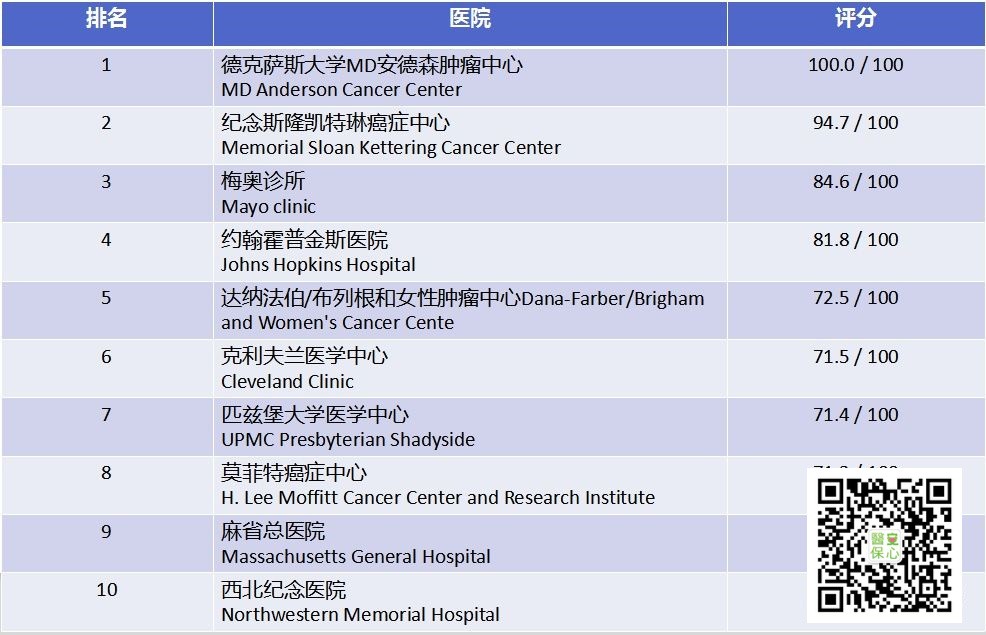
纪念斯隆-凯特琳癌症中心始建于1884年,其前身是由John J. Astor夫妇(在泰坦尼克號上最有錢的遇難者)等人在纽约曼哈顿上西区创办的纽约癌症医院(New York Cancer Hospital),1899年改名为癌症和相关疾病治疗纪念总医院(General Memorial Hospital for the Treatment of Cancer and Allied Diseases),1916年去除“总”字,又更名为癌症和相关疾病治疗纪念医院(Memorial Hospital for the Treatment of Cancer and Allied Diseases)。
1936年,John D. Rockefeller, Jr向医院捐赠了约克大道(York Avenue)的一块地,这便是我们医院目前所在地。新建的纪念医院于1939年正式开业,医院大楼历经1970年-1973年的重建后仍屹立于今。
20世纪40年代,通用汽车公司(General Motors)的两位前高管Alfred P. Sloan和Charles F. Kettering联手创建了纪念斯隆-凯特琳研究所(Sloan Kettering institute,SKI),该研究所自成立至今一直是美国首屈一指的生物医学研究机构之一。从1948年正式启用的纪念斯隆-凯特琳研究所毗邻纪念医院。
骨髓移植纪念斯隆-凯特琳癌症中心在过去30年实施了4000多例自体骨髓移植和同种异体骨髓移植,每年接诊近400名骨髓移植患者。凭借整个团队的专业和经验,这里的患者通常都能取得良好的治疗结果。美国国家骨髓捐赠计划(US National Marrow Donor Program)开展的一项独立研究结果显示,纪念斯隆-凯特琳癌症中心的同种异体骨髓移植的1年存活率在纽约附近的三州区域内名列前茅。
位於俄亥俄州克利夫蘭市的克利夫蘭診所是一家非營利性學術醫療中心,提供臨床和醫院護理服務,是研究,教育和健康信息領域的領導者。克利夫蘭診所擁有的Taussig Cancer Center(陶西格癌症中心)對於乳腺癌、頭頸癌等多種癌症處於領先地位,診所還有多種療法的臨床試驗,確保患者享受到最新的抗癌療法。這裡的450多名醫生,研究人員,護士和技術人員,每年為數千名患者提供癌症特異性護理。
如果你在沒有雇主提供團體保險的情況下延遲加入B部分,也會導致保費增加,增加幅度為10% X 推遲申請年數(以滿12個月為一年),並且只要你加入B部分這個罰款就會一直存在。假設你的IEP截止日期在2016年12月,你等到2019年3月(GEP)才申請加入B部分,那麼你需要交納的保費將增加20%(雖然總共延遲了27個月,但只算2年)。
D部分延遲申請也會產生罰款,並且是終生的,保費增加幅度為1% National Base Beneficiary Premium x 無處方藥保險的整月數,而後四捨五入至最接近的$ 0.10。2019年美國基礎受益人保費是$33.19,2020年是$32.74。
假設你的IEP截止於2016年5月31日,你當時沒加入D部分,等到2019年的OEP才加入,D部分要在2020年1月才生效,那麼你沒有處方藥保險的月數為2016年6月至2019年12月,共31個月。所以2019年的罰款為$33.19 x 31% = $10.29,四捨五入至$10.30;而2020年罰款為$32.74 x 31% = 10.15,四捨五入至$10.20。
聯邦醫療保險Medicare紅藍卡計劃詳情(包括四大部份)
A 部份—— 住院護理保險(Hospital Insurance):支付住院費用。保險人的工齡如果超過40 個季點,而且年滿65歲的話,則可以免除保費。但如果工齡少於 40 個季點,則須視情況每月支付費用。